As Ghana steps up its fight against climate change, the Greater Accra Resilient and Integrated Development Project (GARID) is transforming parts of the capital — clearing drains, upgrading infrastructure, and improving living conditions in flood-prone areas like Nima, Alajo, and Akweteman.
But in Odawna, just a few kilometers away, residents feel forgotten. Recurrent floods and extreme heat continue to devastate lives and livelihoods, exposing deep inequalities in Ghana’s climate resilience efforts.
GARID Brings Relief — But Not for Everyone
In Nima and Alajo, GARID’s impact is clear. New drains, raised pavements, and better waste management have reduced flooding and made neighborhoods safer.
The project, led by the Ministry of Works and Housing with support from the World Bank, is designed to protect vulnerable urban communities from climate shocks.
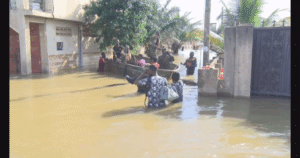
Yet in Odawna, the situation remains dire. Drone footage from recent floods shows submerged houses, destroyed clinics, and drains clogged with debris. Over 3,000 people have been displaced this year after heavy rains overwhelmed the area.
“It’s Not Just Water — It’s a Killer”
For many residents, each rainfall brings fear and loss.
“The roads were flooded. I couldn’t move. I had to watch my child suffer until the water went down,” said Mary Klottey, an Odawna resident.
Others recall drowning incidents. “Two people drowned in the gutter right here. It’s not just water — it’s a killer,” another resident lamented.
Beyond the tragic deaths, floods destroy homes, disrupt schooling, and make healthcare inaccessible — trapping families in poverty.
When the Floods End, the Heat Begins
When the rains subside, Odawna faces another crisis: intense urban heat.
“It’s like an oven inside. I can’t sleep. My skin itches, and I feel dizzy most nights,” said Seth Kusi, a glass repairer living in a metal kiosk.
Without trees or proper ventilation, heat lingers long into the night. According to Dr. Ebenezer Amankwah of the University of Ghana, nighttime temperatures in Odawna can be up to six degrees Celsius higher than the national average — increasing dehydration and heat-related illnesses.
“When floodwaters destroy clinics and heat disables equipment, healthcare collapses. We must climate-proof these communities,” Dr. Amankwah urged.
Healthcare on the Edge
Repeated floods have badly damaged health facilities in Odawna. Videos show nurses drying soaked medical tools and patients waiting in the heat for care.
Dr. Amankwah warns that without urgent investment, medical services in informal settlements will continue to decline. “We need to raise clinic foundations, install cooling systems, and protect their power supply,” he said.
Communities Fighting Back
Despite limited resources, residents are adapting. Some raise their beds, clear drains by hand, and form clean-up groups. But their efforts can’t match the scale of the threat.
“We’ve increased public education and advised people to move to safer areas. Odawna is part of the government’s long-term plan, including dredging the Odaw River,” said Dennis Nartey, NADMO Regional Director.
Government and Expert Response
Officials from the Environmental Protection Agency (EPA) and Ministry of Works and Housing insist action is ongoing.
“Tree planting and reducing glass surfaces help cool homes. Communities must take part in these efforts,” said EPA CEO Prof. Nana Ama Klutse.
“We’ve started dredging the Odaw River to improve water flow and reduce flooding, but more work is needed,” added Richard Kofi Amekor, Head of the Ministry’s Drainage Department.
Experts say expanding GARID’s approach to include Odawna and other high-risk areas could save lives and make climate resilience more equitable.
Hope Amid the Hardship
In Odawna, children plant trees, young people lead clean-ups, and women rebuild small businesses — proof that resilience lives even in hardship.
“The GARID project shows that change is possible. We just need it to reach everyone,” said a resident volunteer.
As Accra faces worsening floods and heatwaves, experts agree that the future of Ghana’s climate resilience depends on inclusive, community-led action — ensuring no one is left behind.